What Got You Here Will Not Get You There: Seeing Differently
Numbers 13
Sun, Oct 11, 2026
Seven Realities of Experiencing God by Henry Blackaby
Reality #1: God is always at work around you.
Reality #2: God pursues a continuing love relationship with you that is real and personal.
Reality #3: God invites you to become involved with Him in His work.
Reality #4: God speaks by the Holy Spirit through the Bible, prayer, circumstances, and the church to reveal Himself, His purposes and His ways.
Reality #5: God’s invitation for you to work with Him always leads you to a crisis of belief that requires faith and action.
Reality #6: You must make major adjustments in your life to join God in what He is doing.
Reality #7: You come to know God by experience as you obey Him and He accomplishes His work through you.
"I uploaded my completed message to AI and requested a poem be generated to tie the entire message together."
- Dr. Stephen Trammell, Senior Executive Pastor
Seeing Differently
Same land.
Same grapes.
Same walls.
Same giants.
Twelve men stood on the edge of tomorrow,
and all twelve saw the same thing.
Ten saw a reason to retreat.
Two saw a reason to trust.
Ten measured themselves against the giants.
Two measured the giants against their God.
Same land.
Same giants.
Different eyes.
Because sometimes the greatest battle
is not around us—
it is within us.
It is the battle over what gets our attention,
what shapes our perception,
what defines what we believe is possible.
Fear says,
“Look how big the giant is.”
Faith says,
“Look how faithful God is.”
Fear says,
“You are only a grasshopper.”
Faith says,
“The Lord is with us.”
Faith does not pretend there are no giants.
Faith does not deny the walls.
Faith does not call the wilderness easy.
Faith simply refuses
to look at tomorrow
without putting God in the picture.
So when the wind begins to blow,
when the waves begin to rise,
when the giant fills your field of vision,
listen again for the voice of Jesus:
“Come.”
And when your faith is strong,
take the step.
When your faith is trembling,
take the step.
And if you begin to sink,
remember—
the One who called you forward
is also the One who reaches out His hand.
What got us here
will not get us there.
So, Lord—
Touch our eyes:
Help us see differently.
Touch our hearts:
Remind us: God is with us.
Open our hands toward tomorrow:
We will move forward in faith.
Same world.
Same obstacles.
Same uncertain tomorrow.
But we will not see it the same way.
Our eyes are on God.
His presence is with us.
And our hands are open to whatever comes next.
We will see differently.
We will trust deeply.
And we will move forward in faith.
____________________________________________
Trusting God: God's Clock and Cloud
Numbers 9:15–23
Sun, Sep 27, 2026
How do we follow God’s cloud today?
1. Be still.
The decision to slow your pace until the most subtle desires of your flesh have been graciously neutralized is what perfectly positions you to receive the answers to your prayers: the gift of God’s will!
Terry Looper, “Sacred Pace”
2. Read Scripture.
3. Listen to the Holy Spirit. Let peace be your umpire.
4. Consult wise counsel and gather the facts.
____________________________________________
Trusting God: Seasons of Life
Numbers 8:23-26 (CSB)
Sun, Sep 13, 2026
The 6 Seasons of Calling by Brian Sanders

Things you shouldn't do after 50...
1. Groan audibly every time you stand up from a chair
2. Complain about "kids these days" while scrolling on your phone
3. Forget your glasses are on your head and go looking for them
4. Get overly invested in the thermostat setting like it's a personal mission
5. Give unsolicited advice to people who clearly didn't ask
6. Give directions using landmarks that don't exist anymore
7. Tell people how much things "used to cost"
“The trajectory of Levitical life incorporated a built-in transition. At fifty years old, a Levite retired from his service in the work, but this represented a shift rather than a stop. He could assist his brothers to fulfill responsibilities at the tent of meeting, but he must not do the work. The purpose was not to remove productive workers from service, but to redirect their service in a more mature direction, given the conditions of their occupation. Some faculties—judgment, wisdom, and insight—may actually improve with age... “
William Messenger, Theology of Work Bible Commentary
Fluid intelligence to crystallized intelligence
Fluid intelligence is the ability to think flexibly and reasonably, to be creative, and to solve novel problems. Crystallized intelligence is “the ability to use a stock of knowledge learned in the past” (p. 27).
So, as we get older, we will flourish if we can jump from the first to the second curve. As Brooks writes, “So here’s the secret, fellow striver: Get on your second curve. Jump from what rewards fluid intelligence to what rewards crystallized intelligence” (p. 40). That’s the main point of From Strength to Strength. Brooks says, “The rest of this book, therefore, is dedicated to helping you make the jump (pp. 40-41).
Success of the over 50 crowd:
A 50-year-old startup founder is 2.8 times more likely to found a successful startup as a 25-year-old founder. A recent study conducted by the Census Bureau and two MIT professors found the most successful entrepreneurs tend to be middle-aged–even in the tech sector. The researchers compiled a list of 2.7 million company founders who hired at least one employee between 2007 and 2014. The average startup founder was 45 years old when he or she founded the most successful tech companies.
And in general terms, a 50-year-old entrepreneur is almost twice as likely to start an extremely successful company as a 30-year-old.
Why? Because they don’t just have ideas but understand the strategy to get them done.
Time magazine: “Old People Are Happier Than People In Their 20s”
“Older people are much better able to brush off life’s small stressors and accumulate a valuable thing called wisdom: being emotionally stable and compassionate, knowing yourself and being able to make smart social decisions”
Beyond the Snowbird: How Boomers are Shaping the Future of Retirement
By Polco on May 2, 2025
“While the Silent Generation flocked to sunshine states and golf communities, Baby Boomers are seeking something different: purpose, connection, and vibrancy. These modern retirees are embracing what you might call “amenity migration”—moving not just for affordability, but for walkability, wellness, culture, and opportunities for meaningful work.”
Assessments
____________________________________________
Moving with God Together: Four Attributes of an Impactful Person
Numbers 7:89–8:4
Sun, Aug 30, 2026
____________________________________________
Moving with God Together: Blessed
Numbers 6:22-27 (CSB)
Sun, Aug 23, 2026
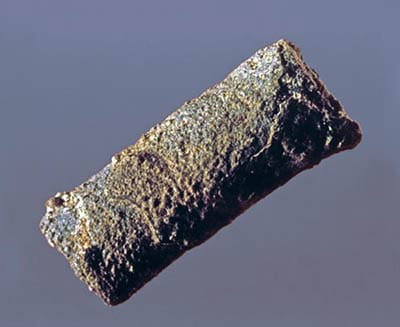
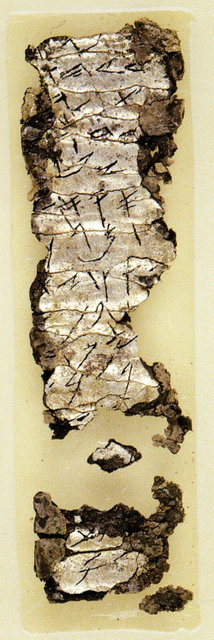
In 1979, Dr. Gabriel Barkay and his archaeological team discovered what is now known as the Ketef Hinnom Silver Scrolls just outside the old city of Jerusalem. These two tiny silver scrolls, about the size of a cigarette, were found in a collapsed tomb, carefully unrolled and analyzed. On the left is the amulet(s) as it was found at the Ketef Hinnom archaeological site. It had a hole on each end for use as a pendant. On the right is how the amulet appears unrolled (it is comprised of silver foil). Written in paleo-Hebrew were the words of the Aaronic blessing from Numbers 6:24-26, something scholars have declared to be one of the most significant biblical archaeological finds in history! These scrolls, which also had verses from Deuteronomy written on them, date to the 7th century B.C. of the 1st Temple Period.
Learn more here!
____________________________________________
Moving with God Together: Plan to Succeed
Numbers 1:1-5, 46 & 2:1-2
Sun, Aug 16, 2026
Layout of Israelite Tribes
The Israelite camp was laid out in a cross shape, with three tribes grouped on each side of the tabernacle, which was situated in the middle. The Levites camped around the tabernacle within the perimeter of the camp and thus stood between the people and access to God. Even in the physical layout of the Israelite nation on the move, then, the message was clear that the people needed a human mediator to stand between them and God. The ultimate and perfect mediator would come in the Son of God, Jesus Christ, who would die on a cross (see 1 Tim 2:5; Heb 8:6). Evans, T. (2019). The Tony Evans Bible Commentary (p. 174). Holman Bible Publishers.
The arrangement of the 12 tribes as detailed in Numbers 2 forms the shape of a cross[1]. When the tribes and their population counts are carefully laid out as described in Numbers 2, the picture of a giant cross emerges[1].
The layout works like this: Judah, Issachar, and Zebulun positioned on the east side under the standard of the Lion[2], Ephraim, Manasseh, and Benjamin on the west side under the standard of the Ox[2], Dan, Asher, and Naphtali on the north side under the standard of the Eagle[2], and Reuben, Simeon, and Gad on the south side under the standard of the Man[2]. The tabernacle was positioned in the midst of the camp[2], creating the center point of the cross.
The top of the cross points eastward toward the Promised Land[1]. What makes this particularly striking is the theological significance: the method of putting people to death on a cross was not invented for a very long time after Numbers was written[1], yet this cross pattern appears in the very structure of Israel’s encampment. From a heavenly view, with all the tribes arranged on the north, south, east and west with the tabernacle in the midst, the camp of Israel was arranged in the shape of the cross[2].
[1] Todd Hampson, The Chronological Guide to Bible Prophecy: An Illustrated Panorama from Genesis to Revelation (Eugene, OR: Harvest House Publishers, 2022), 48–49.
[2] Kevin J. Conner, The Tabernacle of Moses (Conner Ministries, 2018), 11–12.
Names of the Tribal leaders:
The twelve men listed in Numbers 1:5–16 are tribal representatives:
o Elizur son of Shedeur (Reuben), My God is my Rock
o Shelumiel son of Zurishaddai (Simeon), My friend is God
o Nahshon son of Amminadab (Judah), Line of David and Jesus
o Nethanel son of Zuar (Issachar), God Gave
o Eliab son of Helon (Zebulun), God is Father
o Elishama son of Ammihud (Ephraim), My God has heard
o Gamaliel son of Pedahzur (Manasseh), God is my reward
o Abidan son of Gideoni (Benjamin), My father has judged
o Ahiezer son of Ammishaddai (Dan), My brother is a help
o Pagiel son of Ochran (Asher), Fortune of God
o Eliasaph son of Deuel (Gad), God has added
o Ahira son of Enan (Naphtali), Re (Egyptian god) is a brother
These men are described as “leaders of their ancestral tribes” and “heads of Israel’s clans.” (Num 1:4–16) Each served as a spokesman for his tribe, with the Hebrew word for “assist” meaning “to stand.”[1] These men functioned as representatives for their ancestral tribes in matters of military conscription, worship leadership, and general administration.[1]
Their responsibilities extended across multiple domains. The tribal leaders helped Moses and Aaron with the census, enabling the numbering to be done accurately and efficiently.[2] The twelve names recorded in verses 5–15 recur in Numbers 2:3–31 (tribal camp arrangements), 7:12–83 (tribal offerings for the sanctuary), and 10:14–27 (tribal divisions depart from Sinai).[1] During the departure from Sinai, these leaders commanded their respective military divisions—Nahshon over Judah, Nethanel over Issachar, Eliab over Zebulun, Elizur over Reuben, Shelumiel over Simeon, Eliasaph over Gad, Elishama over Ephraim, Gamaliel over Manasseh, Abidan over Benjamin, Ahiezer over Dan, Pagiel over Asher, and Ahira over Naphtali. (Num 10:14–27)
[1] R. Dennis Cole, Numbers, The New American Commentary (Nashville: Broadman & Holman Publishers, 2000), 3b:70.
[2] Jay Sklar, Numbers, ed. Tremper Longman III and Scot McKnight, The Story of God Bible Commentary (Grand Rapids, MI: Zondervan Academic, 2023), 4:51.
_______________________________________
Abraham Lincoln
Lincoln & McClellan at Antietam, October 3, 1862
Antietam, Maryland
_______________________________________
Jewish Contributions to Everyday Life
Medical Breakthroughs:
The Heimlich Maneuver: Henry Heimlich was an American Jewish thoracic surgeon who developed the Heimlich maneuver in 1974. This simple abdominal thrust technique has saved hundreds of thousands of people from choking to death. It is taught in every first aid class, posted in every restaurant and known by people worldwide. Heimlich himself used his own maneuver twice in his life to save choking victims, the last time at age 96 in a retirement home in 2016. Source: American Journal of Emergency Medicine, Cincinnati Enquirer
The Polio Vaccine: Jonas Salk, as mentioned above, developed the polio vaccine in 1955, eliminating one of the most feared childhood diseases in human history.
Chemotherapy: Paul Ehrlich was a German Jewish physician and scientist who pioneered the concept of chemotherapy. His concept of using chemicals to target and kill specific disease cells became the foundation of all modern cancer chemotherapy. He won the Nobel Prize in Medicine in 1908. Source: Nobel Prize Organization
Everyday Inventions You Use:
Blue Jeans: Levi Strauss, as mentioned above, invented and patented blue jeans in 1873. Billions of people wear them every day worldwide.
The Shopping Cart: Sylvan Goldman was an Oklahoma Jewish grocery store owner who invented the shopping cart in 1937. He owned the Humpty Dumpty supermarket chain in Oklahoma City and noticed customers stopped shopping when their hand baskets got too heavy. He designed a folding cart on wheels and changed retail shopping forever. Every shopping cart in every store in the world traces back to this Oklahoma Jewish businessman. Source: Smithsonian Magazine, Oklahoma Historical Society
Google: Larry Page and Sergey Brin, both Jewish, co-founded Google in 1998 while at Stanford University. Google is now the most visited website in the world and processes over 8.5 billion searches per day. It has fundamentally changed how all of humanity accesses information. Source: Google Corporate History, abc.xyz
Facebook: Mark Zuckerberg, as mentioned above, founded Facebook in 2004, changing human communication forever.
The Ballpoint Pen: Ladislao Biro was a Hungarian Jewish journalist who invented the ballpoint pen in 1938. Frustrated with fountain pens that smeared and leaked, he developed a pen using quick-drying ink and a tiny rotating ball at the tip. The word Biro is still used in many countries as the common word for any ballpoint pen. You have probably used one today. Source: Encyclopedia Britannica
Instant Coffee: Nestle chemist Max Morgenthaler, who was Jewish, developed modern instant coffee in 1938 while working to find a use for Brazil's coffee surplus. His product called Nescafé became one of the most consumed beverages in human history. Millions of people start their day with instant coffee because of his work. Source: Nestle Corporate History, nestle.com
The Microphone: Emile Berliner was a German Jewish immigrant to the United States who invented the first practical microphone in 1876. He also invented the gramophone and the flat disc record, which became the foundation of the entire recorded music industry. Every concert, every church sound system, every podcast, and every phone call depends on technology that traces back to Berliner. Source: Smithsonian Institution Archives
Entertainment and Media:
Superman: Jerry Siegel and Joe Shuster were two Jewish teenagers from Cleveland, Ohio, who created Superman in 1933. Many scholars have noted that Superman's story mirrors the Jewish experience. A baby sent away by his parents to escape destruction, arriving in a new world, hiding his true identity while fighting for justice. Superman became the foundation of the entire American comic book and superhero industry worth billions of dollars today. Source: Library of Congress, Smithsonian Magazine
Science and Technology:
The Theory of Relativity: Albert Einstein, as mentioned above, changed all of modern science and technology.
The USB Drive: Dov Moran is an Israeli Jewish engineer who invented the USB flash drive in 1999 while working at M-Systems in Israel. Before the USB drive, people used floppy disks and zip drives to transfer data. The USB drive changed personal computing and data storage worldwide. You have probably used one this week. Source: IEEE Spectrum, Time Magazine
The Nobel Prize data is striking. Though representing less than half a percent of global population, Jewish recipients hold a disproportionately high share of Nobel Prizes, particularly in physics, chemistry, and medicine. Over the past century, Jewish people—comprising just 0.02 percent of the world’s population—have received approximately one-fourth of Nobel Prizes awarded in the sciences.
_______________________________________
Why Replacement Theology is incorrect
Replacement theology is considered wrong on several grounds—theological, scriptural, and historical.
Theological Problems
Replacement theology (also called supersessionism) claims the New Covenant has replaced the Mosaic covenant, making the Christian Church the inheritor of God’s promises to Israel.[1] However, God’s unconditional covenant with Abraham regarding the land was not contingent on Israel’s behavior but depended entirely on God’s commitment.[2]The doctrine of supersessionism fails to align with Scripture[2], particularly Paul’s teaching in Romans 9–11, where Gentile followers of Jesus are described as “grafted into” the remnant of Israel.[1] This imagery emphasizes that the root of Christianity is Judaism—without Judaism, there is no real Christianity.[1]
Logical and Ethical Dangers
If supersessionism were God’s will, the logical conclusion would be removing the Jewish people and their distinct religious identity from existence, leaving no legitimate place for the other.[3] This reasoning reveals the doctrine’s destructive potential.
Historical Consequences
Supersessionism has spurred anti-Semitism throughout Church history.[2] More starkly, a spirit of triumphalism characterized Christian-Jewish relations, leading Christians to view Jews as spiritually deaf or willfully devilish, which escalated into medieval demonization and dehumanization, ultimately contributing to the Holocaust—turning a gospel of love into a sermon of hatred.[3] Bad theology eventually produces bad sociology, and the destructive early church teaching had dire consequences for centuries.[3]
The core issue is that replacement theology denies God’s faithfulness to His covenants and has historically justified violence against Jews.
[1] Canon Andrew White, Father, Forgive: Reflections on Peacemaking (Oxford, England: Monarch Books, 2013). [See here, here, here, here, here.]
[2] Col David J. Giammona, Troy Anderson, and Robert Jeffress, The Military Guide to Disarming Deception: Battlefield Tactics to Expose the Enemy’s Lies and Triumph in Truth (Chosen, 2022), 88–89.
[3] Marvin R. Wilson, Exploring Our Hebraic Heritage: A Christian Theology of Roots and Renewal (Grand Rapids, MI; Cambridge, U.K.: William B. Eerdmans Publishing Company, 2014), 245–247.
Podcasts:
____________________________________________
Holy: God’s Presence, Our Lives
Jesus is Our Holiness
Sun, Aug 2, 2026
In critical circles, scholars are fond of referring to chapters 17 through 26 as "the Holiness Code.”
August Klostermann gave these chapters this name in an article that he wrote in 1877.
The Major Groupings:
1. Dietary Laws (Kashrut) — Leviticus 11
2. Purity After Childbirth — Leviticus 12
3. Skin Diseases and "Leprosy" (Tzaraat) — Leviticus 13–14
4. Bodily Discharges — Leviticus 15
5. Sexual Purity / Prohibited Relations — Leviticus 18 and 20
6. Holiness Code Ethical-Ritual Blend — Leviticus 17, 19, 21–22
Two Different Kinds of "Purity"
- Not sin: Ritual/ceremonial impurity (tum'ah) — from childbirth, death, disease, discharge. Not sin, but a physical-symbolic state requiring washing, waiting, or sacrifice.
- Sin: Moral impurity — from acts like sexual sin, idolatry, murder — which pollutes the land itself and cannot be washed away, only atoned for or punished. They were to care for the poor, high sexual purity and promote justice
Holiness Quotes:
The root meaning of the word translated holy is “different.” A holy person is not an odd person, but a different person. His life has a quality about it that is different. His present “lifestyle” is not only different from his past way of life, but it is different from the “lifestyles” of the unbelievers around him. A Christian’s life of holiness appears strange to the lost (1 Peter 4:4), but it is not strange to other believers.- Warren Wiersbe
“Holiness does not consist in mystic speculations, enthusiastic fervours, or uncommanded austerities; it consists in thinking as God thinks, and willing as God wills.”
-John Brown, nineteenth-century Scottish theologian, quoted in J. Bridges, The Pursuit of Holiness, p. 51
"The holy man is not one who cannot sin. A holy man is one who will not sin." -A. W. Tozer
“Holiness is the habit of being of one mind with God, according as we find His mind described in Scripture. It is the habit of agreeing in God’s judgment, hating what He hates, loving what He loves, and measuring everything in this world by the standard of His Word.” -J.C. Ryle
"What is holiness? Is it not wholeness of character?” – Spurgeon
____________________________________________
Holy: God’s Presence, Our Lives
Jesus is Our High Priest
Sun, July 19, 2026
____________________________________________
Holy: God’s Presence, Our Lives
Rhythms of Connection
Sun, July 12, 2026
_______________________________________
The Five Offerings and Christ’s Fulfillment (Lev. 1-7)
Two offerings of thankfulness and three for forgiveness.
1. FORGIVENESS: Burnt Offering (Leviticus 1)
Represents Christ’s complete dedication of Himself to God. The offering had to be without blemish and presented voluntarily, just as Jesus offered Himself voluntarily “without spot”. Through the offering of Christ’s body, we have been sanctified once and for all (Heb 10:10).
2. THANKFULNESS: Grain Offering (Leviticus 2)
The fine flour speaks to Christ’s perfect character and life - there was nothing rough or uneven in Him. Oil mingled with and poured upon the offering symbolizes the Holy Spirit, reflecting that Christ was conceived by and anointed by the Spirit.
3. THANKFULNESS: Peace Offering (Leviticus 3)
Represents the worshiper and God in that the worshiper could participate in the offering, signifying peace between the offerer and God.
Christ is our peace, who reconciled both Jew and Gentile to God in one body through the cross (Eph 2:14–16).
4. FORGIVENESS: Sin Offering (Leviticus 4)
The worshiper lays his hand on the offering, indicating transference of sin from the sinner to the substitute, with the offering atoning for sin.
God made Christ, who did not know sin, to be sin for us, so that we might become the righteousness of God in Him (2 Cor 5:21).
5. FORGIVENESS: Trespass Offering (Leviticus 5)
Atonement is made for sinful acts - the trespass, the deed, the act against God and against man.
Christ, having been offered once to bear the sins of many, will appear a second time not to bear sin, but to bring salvation (Heb 9:28).
Overview of the Seven Feasts
1. Passover commemorated Israel’s deliverance from Egypt. Jesus is the Passover Lamb whose substitutionary death makes forgiveness possible.
2. The Feast of Unleavened Bread commemorated the escape from Egypt and speaks of the holiness required of believers.
3. First fruits celebrated the harvest and points to Jesus’ resurrection as the first fruits of all Christians’ resurrection.
4. Pentecost (Feast of Weeks) celebrated harvest and speaks of the coming of the Holy Spirit after Jesus’ ascension.
5. The Feast of Trumpets marked the beginning of the civil year and points to the Lord’s return with the trumpet call of God.
6. The Day of Atonement commemorated when atonement was made for Israel’s sins, foreshadowing Jesus’ atoning death on the cross.
7. The Feast of Tabernacles (Booths) commemorated Israel’s desert wanderings and points to Jesus as Redeemer.
_______________________________________
Mark Water, The Bible Made Simple: Tough Questions Clear Answers (AMG Publishers, 2002), 56–57.
Warren W. Wiersbe, Wiersbe’s Expository Outlines on the Old Testament (Wheaton, IL: Victor Books, 1993).
Colin N. Peckham, The Authority of the Bible (Scotland; Great Britain: Christian Focus Publications, 1999), 79–81.
Gary Staats, The Person and Work of Jesus Christ in Each Book of the Old Testament Seen in Its New Testament Fulfillment—An Emmaus Walk, ed. Todd Staats and Judith Kitchen (Gary Staats, 2010), 18.