Sun, Aug 2 - Holy: God’s Presence, Our Lives
Jesus is Our Holiness
In critical circles, scholars are fond of referring to chapters 17 through 26 as "the Holiness Code.”
August Klostermann gave these chapters this name in an article that he wrote in 1877.
The Major Groupings:
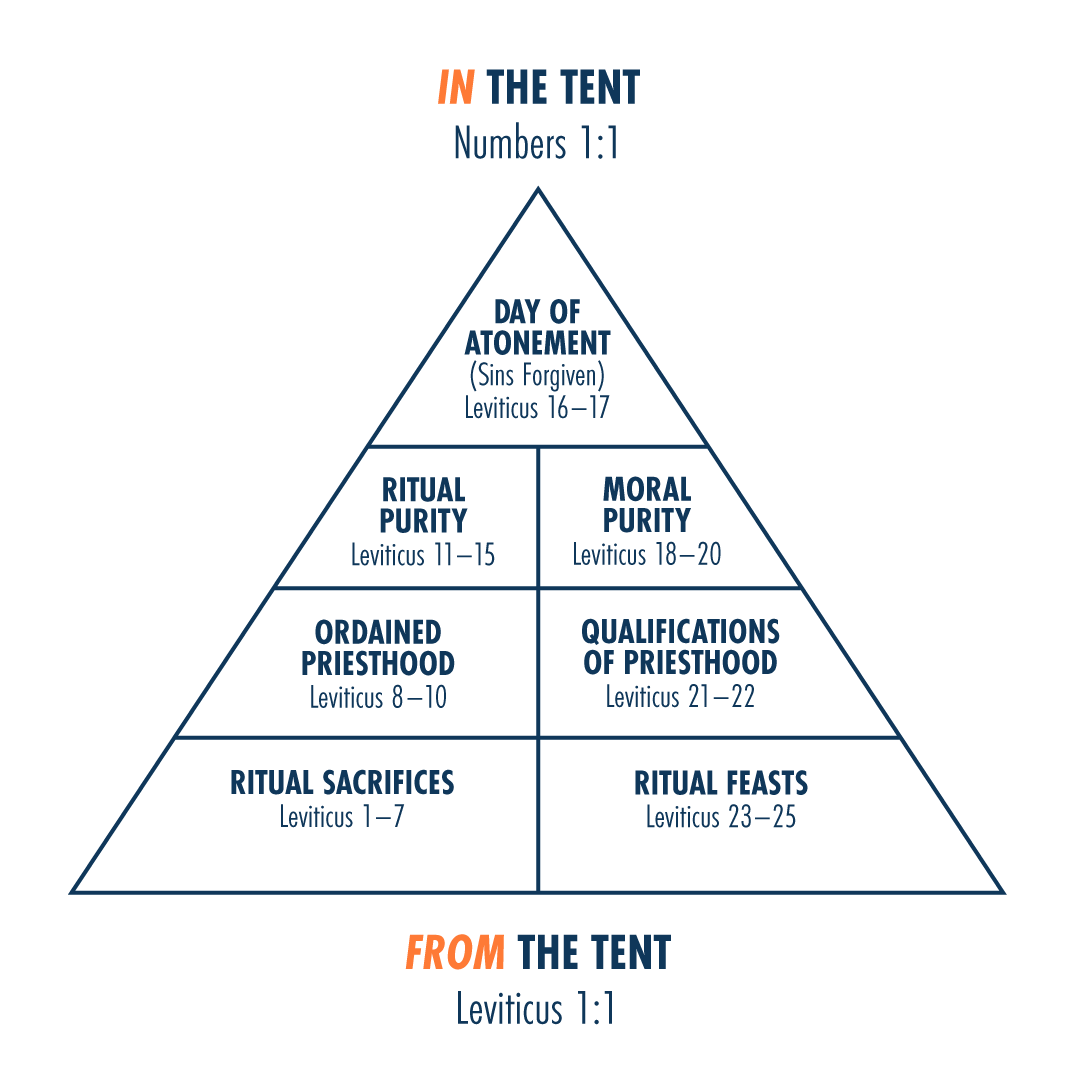
1. Dietary Laws (Kashrut) — Leviticus 11
2. Purity After Childbirth — Leviticus 12
3. Skin Diseases and "Leprosy" (Tzaraat) — Leviticus 13–14
4. Bodily Discharges — Leviticus 15
5. Sexual Purity / Prohibited Relations — Leviticus 18 and 20
6. Holiness Code Ethical-Ritual Blend — Leviticus 17, 19, 21–22
Two Different Kinds of "Purity"
- Not sin: Ritual/ceremonial impurity (tum'ah) — from childbirth, death, disease, discharge. Not sin, but a physical-symbolic state requiring washing, waiting, or sacrifice.
- Sin: Moral impurity — from acts like sexual sin, idolatry, murder — which pollutes the land itself and cannot be washed away, only atoned for or punished. They were to care for the poor, high sexual purity and promote justice
Holiness Quotes:
The root meaning of the word translated holy is “different.” A holy person is not an odd person, but a different person. His life has a quality about it that is different. His present “lifestyle” is not only different from his past way of life, but it is different from the “lifestyles” of the unbelievers around him. A Christian’s life of holiness appears strange to the lost (1 Peter 4:4), but it is not strange to other believers.- Warren Wiersbe
“Holiness does not consist in mystic speculations, enthusiastic fervours, or uncommanded austerities; it consists in thinking as God thinks, and willing as God wills.”
-John Brown, nineteenth-century Scottish theologian, quoted in J. Bridges, The Pursuit of Holiness, p. 51
"The holy man is not one who cannot sin. A holy man is one who will not sin." -A. W. Tozer
“Holiness is the habit of being of one mind with God, according as we find His mind described in Scripture. It is the habit of agreeing in God’s judgment, hating what He hates, loving what He loves, and measuring everything in this world by the standard of His Word.” -J.C. Ryle
"What is holiness? Is it not wholeness of character?” – Spurgeon
______________________________________________
Sun, July 19 - Holy: God’s Presence, Our Lives
Jesus is Our High Priest
______________________________________________
Sun, July 12 - Holy: God’s Presence, Our Lives
Rhythms of Connection
______________________________________________
The Five Offerings and Christ’s Fulfillment (Lev. 1-7)
Two offerings of thankfulness and three for forgiveness.
1. FORGIVENESS: Burnt Offering (Leviticus 1)
Represents Christ’s complete dedication of Himself to God. The offering had to be without blemish and presented voluntarily, just as Jesus offered Himself voluntarily “without spot”. Through the offering of Christ’s body, we have been sanctified once and for all (Heb 10:10).
2. THANKFULNESS: Grain Offering (Leviticus 2)
The fine flour speaks to Christ’s perfect character and life - there was nothing rough or uneven in Him. Oil mingled with and poured upon the offering symbolizes the Holy Spirit, reflecting that Christ was conceived by and anointed by the Spirit.
3. THANKFULNESS: Peace Offering (Leviticus 3)
Represents the worshiper and God in that the worshiper could participate in the offering, signifying peace between the offerer and God.
Christ is our peace, who reconciled both Jew and Gentile to God in one body through the cross (Eph 2:14–16).
4. FORGIVENESS: Sin Offering (Leviticus 4)
The worshiper lays his hand on the offering, indicating transference of sin from the sinner to the substitute, with the offering atoning for sin.
God made Christ, who did not know sin, to be sin for us, so that we might become the righteousness of God in Him (2 Cor 5:21).
5. FORGIVENESS: Trespass Offering (Leviticus 5)
Atonement is made for sinful acts - the trespass, the deed, the act against God and against man.
Christ, having been offered once to bear the sins of many, will appear a second time not to bear sin, but to bring salvation (Heb 9:28).
Overview of the Seven Feasts
1. Passover commemorated Israel’s deliverance from Egypt. Jesus is the Passover Lamb whose substitutionary death makes forgiveness possible.
2. The Feast of Unleavened Bread commemorated the escape from Egypt and speaks of the holiness required of believers.
3. First fruits celebrated the harvest and points to Jesus’ resurrection as the first fruits of all Christians’ resurrection.
4. Pentecost (Feast of Weeks) celebrated harvest and speaks of the coming of the Holy Spirit after Jesus’ ascension.
5. The Feast of Trumpets marked the beginning of the civil year and points to the Lord’s return with the trumpet call of God.
6. The Day of Atonement commemorated when atonement was made for Israel’s sins, foreshadowing Jesus’ atoning death on the cross.
7. The Feast of Tabernacles (Booths) commemorated Israel’s desert wanderings and points to Jesus as Redeemer.
______________________________________________
Mark Water, The Bible Made Simple: Tough Questions Clear Answers (AMG Publishers, 2002), 56–57.
Warren W. Wiersbe, Wiersbe’s Expository Outlines on the Old Testament (Wheaton, IL: Victor Books, 1993).
Colin N. Peckham, The Authority of the Bible (Scotland; Great Britain: Christian Focus Publications, 1999), 79–81.
Gary Staats, The Person and Work of Jesus Christ in Each Book of the Old Testament Seen in Its New Testament Fulfillment—An Emmaus Walk, ed. Todd Staats and Judith Kitchen (Gary Staats, 2010), 18.